
How College Students Can Split Rent and Bills Fairly

Splitting rent fairly starts with agreeing on a method before you sign a lease, not after the first utility bill lands in your group chat with a passive-aggressive "so who's got this?" When roommates want to divide rent in a way that actually feels equitable, the fairest approach usually accounts for room size, shared amenities, and each person's ability to pay. Not just dividing the total by however many bodies are on the lease.
For a lot of college students, this is the first time they've had to run a shared household budget while also juggling class schedules, a part-time job, and financial aid that shows up whenever it feels like it. The math matters. But honestly, the conversation around the math matters just as much. So this guide walks through the actual methods for dividing rent, the tools that make tracking shared costs less of a headache, and the habits that keep your roommate friendships alive through move-out day.
Table of Contents
- Why Splitting Rent Fairly Matters for College Students
- How Do You Split Rent With Roommates Fairly?
- Splitting Utility Bills and Shared Expenses
- Tools and Apps for Tracking Shared Costs
- Setting Up a Roommate Agreement
- Avoiding and Resolving Roommate Money Disputes
- College Student Budgeting for Shared Living
- Frequently Asked Questions
Why Splitting Rent Fairly Matters for College Students
Splitting rent fairly matters because unclear cost-sharing is one of the most common sources of roommate conflict, and money tension that never gets resolved can wreck friendships, grades, and even your standing on the lease. The National Multifamily Housing Council's surveys of renter behavior show roommates becoming a bigger and bigger slice of the rental market as housing costs climb, which basically means more students than ever are negotiating shared costs for the first time with zero experience doing it. Great combo.
And for students specifically, the whole thing gets messier because nobody's income is steady. Someone working 15 hours a week at the campus library, living off an aid disbursement that arrives twice a semester, has a completely different cash flow than the roommate whose parents just wire the rent directly. When the group never actually talks about this out loud, the person with tighter money usually ends up either late on payments or quietly stewing. Sort out a fair split early. Revisit it if the room count or lease terms change. You dodge both of those outcomes.
One thing worth burning into your brain: fair and equal aren't the same thing. An equal split (everything divided by headcount) is dead simple, but it's not fair if one person has a private bathroom, a bigger room, and a parking spot while another one's sleeping in what used to be a den. Getting that distinction straight upfront is honestly the first real step toward a system people will actually stick to for a whole lease.
How Do You Split Rent With Roommates Fairly?
The fairest way to split rent is to pick a method that reflects the real differences in space and amenities, put it in writing before anyone moves in, and then apply it the exact same way every single month. There are three approaches college roommates tend to use, and each one shines in a different living situation.
The Equal Split Method
This is the lazy option, and I mean that as a compliment. Total rent, divided evenly, done. It works great when the bedrooms are roughly the same size, everyone shares bathrooms equally, and nobody's got some obvious edge like a private entrance or a walk-in closet. A ton of roommate groups just default to this because it requires zero negotiation. The problem? It quietly festers if one bedroom is clearly the master suite and another one's a converted office with no window.
The Square-Footage Method
Here, each person pays rent proportional to the square footage of their private bedroom (sometimes their private bathroom too) relative to the total livable space. Say you've got a three-bedroom apartment that's 1,200 square feet, and one bedroom is 200 square feet. That roommate pays roughly 200/1,200, or about 16.7% of the rent, with the common areas either left out of the math or split evenly on top. It takes a little more effort upfront, you're literally measuring rooms with a tape measure or eyeballing a floor plan, but it's widely considered the most objective way to handle real size differences. I like it because it's hard to argue with a number.
The Weighted/Amenity Method
This one starts from either the equal or square-footage split and then bolts on adjustments for specific perks. A private bathroom might tack on a flat premium, say an extra $50 to $75 a month. A bigger closet, a smaller bump. The shared living room and kitchen stay split evenly since, well, everyone uses them. It's the most customizable option and also the one that requires the most talking, because your group has to actually agree on what each perk is "worth" in real dollars. That conversation can get a little awkward, not gonna lie.
| Method | Best For | Pros | Cons |
|---|---|---|---|
| Equal split | Similar-sized rooms, no major amenity differences | Simple, no math required, easy to explain | Can feel unfair if rooms differ significantly |
| Square-footage split | Rooms of noticeably different sizes | Objective, based on measurable space | Requires measuring rooms; ignores non-space perks |
| Weighted/amenity split | Rooms with private bathrooms, balconies, or parking | Most customizable and perceived as fairest | Needs group agreement on dollar values for perks |
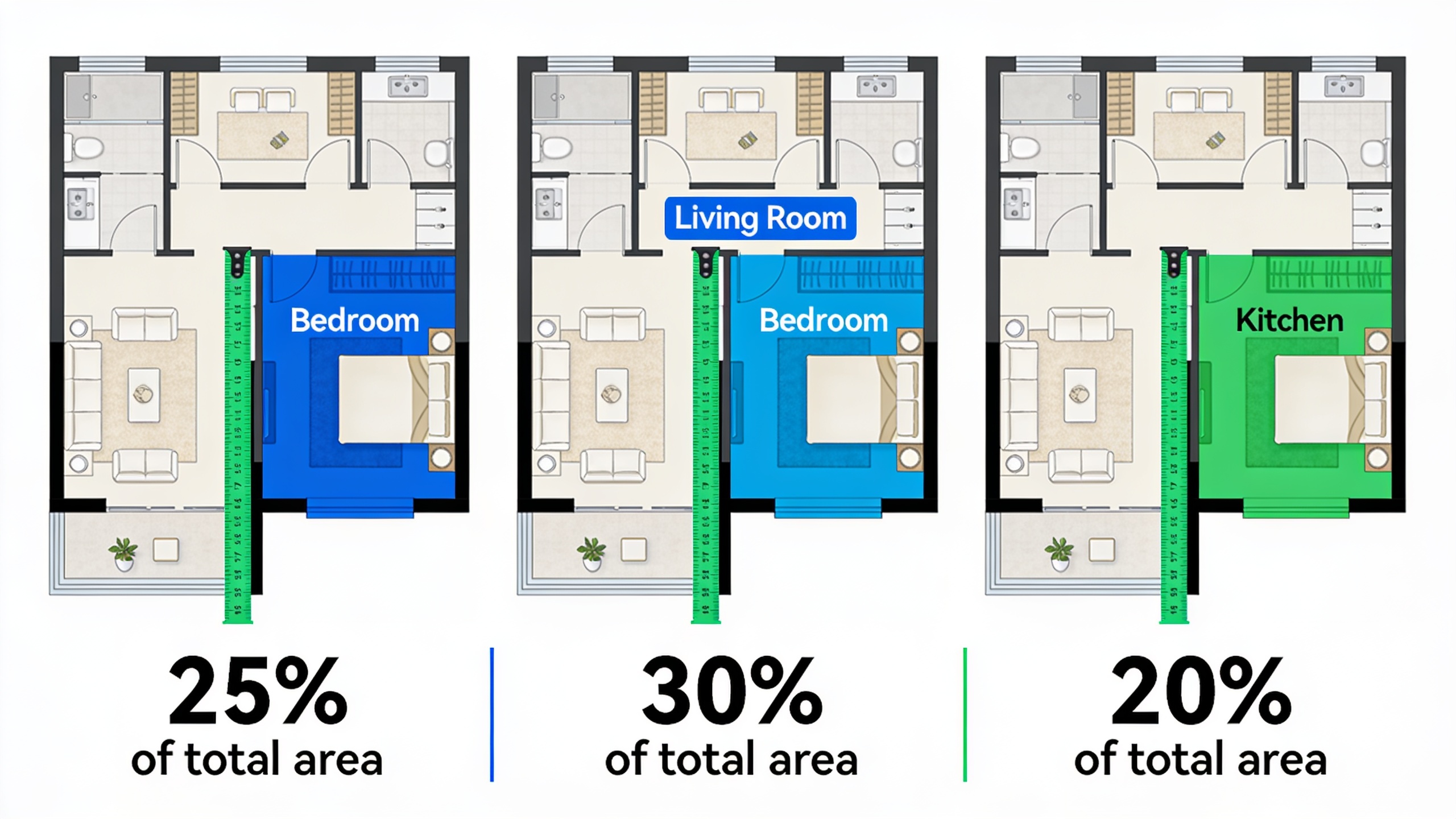
Whatever you land on, the real key is writing it down and getting everyone to agree before the first rent payment is due. Not after somebody's already feeling shortchanged and stewing about it.
Splitting Utility Bills and Shared Expenses
Utility and household bills should usually be split differently from rent, because they don't track with room size the way rent does. Most students just split utilities evenly, while variable stuff like groceries or streaming gets tracked individually and settled up on its own. When I say "utility bill" here I mean the recurring stuff: electricity, gas, water, internet, sometimes trash. Things that get billed to the whole apartment rather than to one person.
Since usage is basically impossible to measure without submetering (which almost no rental apartment has), an even split is the standard default for utilities, even when you're using a size-based method for rent. The one common exception is internet and streaming, which some groups split unevenly if a roommate genuinely doesn't use certain services. In practice though? Most students end up splitting these evenly too, because carving out an exception for every single subscription tends to cause more friction than the couple bucks you'd save is worth.
Groceries and household supplies are the real wildcard, because usage actually does vary a lot person to person. The toilet paper does not disappear at an equal rate, is what I'm saying. Most student households handle this one of two ways: a shared "house fund" everyone chips into monthly for communal stuff, or a rotating system where each person takes a turn buying supplies for the whole place. Both work fine. Both also need someone to keep track of who's paid in or whose turn it is, which is exactly the kind of forgettable little bookkeeping that quietly falls apart around week six of the semester.
Which is where spotting the warning signs of messy bill-splitting comes in handy. If your household is already forwarding Venmo screenshots into the group chat, guessing who covered the electric bill last month, or straight-up arguing about whether someone already paid, it's worth skimming 5 Signs You Need a Bill-Splitting App Right Now to figure out whether you've outgrown doing this by hand.
Tools and Apps for Tracking Shared Costs
A bill-splitting app is software that lets a group log shared expenses, track who paid what, and calculate who owes whom, so you're not doing mental math or squinting at a spreadsheet. For roommates wrangling rent, utilities, and groceries all at once, having a running ledger kills most of the ambiguity that fuels roommate money fights in the first place.
PayYaar is one option built for exactly this. It's a free smart expense app, on Android now with iOS support on the way, made for both personal budgets and group spending. The part I actually like is that you don't have to manually type out every transaction. PayYaar's AI smart capture lets you log expenses by text, voice, receipt scan, or even shared text messages, which is genuinely useful when you're a busy student who is not about to open a spreadsheet every time someone does a grocery run. Worth being upfront about what it isn't, though: PayYaar doesn't hold your money, process UPI payments, or act like a bank. It's a bookkeeping and rewards-discovery tool, and the actual settling up happens through your existing UPI app using its built-in settlement helpers.
For roommate households, PayYaar has an AI Plan template built specifically for Roommates, sitting alongside templates for Trip, Home, Couple, Office, and Event groups. So your apartment can set up a shared space that matches how you actually split things (rent, utilities, groceries) instead of jamming every expense into one generic "split evenly" bucket. There's also an item detection feature where you photograph shopping items like groceries or supplies and get estimated local unit market prices, which is a nice sanity check on whether a grocery bill looks reasonable before you split it.
If the whole idea of AI-assisted expense tracking is new to you and you're wondering how it's any different from just dumping receipts in a notes app, What Is an AI Expense Tracker? Why It Matters in 2025 breaks down what these tools actually do and why the automation matters when you've got a pile of shared costs going at once.
And look, some households just stick with a shared spreadsheet, which is totally fine for a two-person apartment with predictable bills. But it tends to fall apart the second you add a third or fourth roommate and irregular stuff starts showing up, like a busted appliance or a shared Amazon order nobody remembers agreeing to. The trade-off is basically time: a spreadsheet costs nothing but somebody's constant attention, while an app keeps the running balance updated so no one has to remember to touch a cell.
Setting Up a Roommate Agreement
A roommate agreement is a written doc, separate from your actual lease, that lays out how rent, utilities, and chores get divided, plus house rules and what happens if someone bails early. It does not need to be some notarized legal contract to be worth your time. Even a shared Google Doc that everyone reads and verbally agrees to will kill off most of your "but I thought we said" arguments before they start.
At a bare minimum, a solid roommate agreement should cover the rent-splitting method you picked (equal, square-footage, or weighted), the date each person needs their share ready by, how utilities and groceries get handled, and what happens with the security deposit at move-out. I'd also throw in guest policies and quiet hours, because those quietly turn into money issues. Think a roommate whose partner basically lives there rent-free, running up the water and electricity everyone's splitting.
Here's the clause everyone skips and shouldn't: what happens if someone falls behind, or leaves the lease early. Decide in advance whether the group floats the shortfall temporarily, charges a late fee, or requires a notice period before someone can move out. Otherwise you're scrambling. One thing that surprises a lot of students, most landlords hold every tenant jointly and severally liable for the full rent, no matter what you worked out among yourselves. So your internal agreement isn't really about the lease obligation (the landlord will enforce that regardless of your little doc). It's about protecting the friendships and making sure people actually get paid back.
Avoiding and Resolving Roommate Money Disputes
Most roommate money disputes come from confusion, not malice. Someone genuinely forgot, miscounted, or assumed a different arrangement, and the fix is almost always better tracking plus a scheduled check-in, not a dramatic confrontation. Building in a regular, low-stakes moment to talk about money strips away the awkwardness of only ever bringing it up when something's already gone sideways.
A simple monthly "money check-in," even just five minutes once everyone's home for the night, where you confirm rent went out, utilities are current, and the ledger looks right, catches the small stuff before it snowballs into a fight. Way easier when there's already a shared record everyone can glance at together instead of everyone relying on their own fuzzy memory.
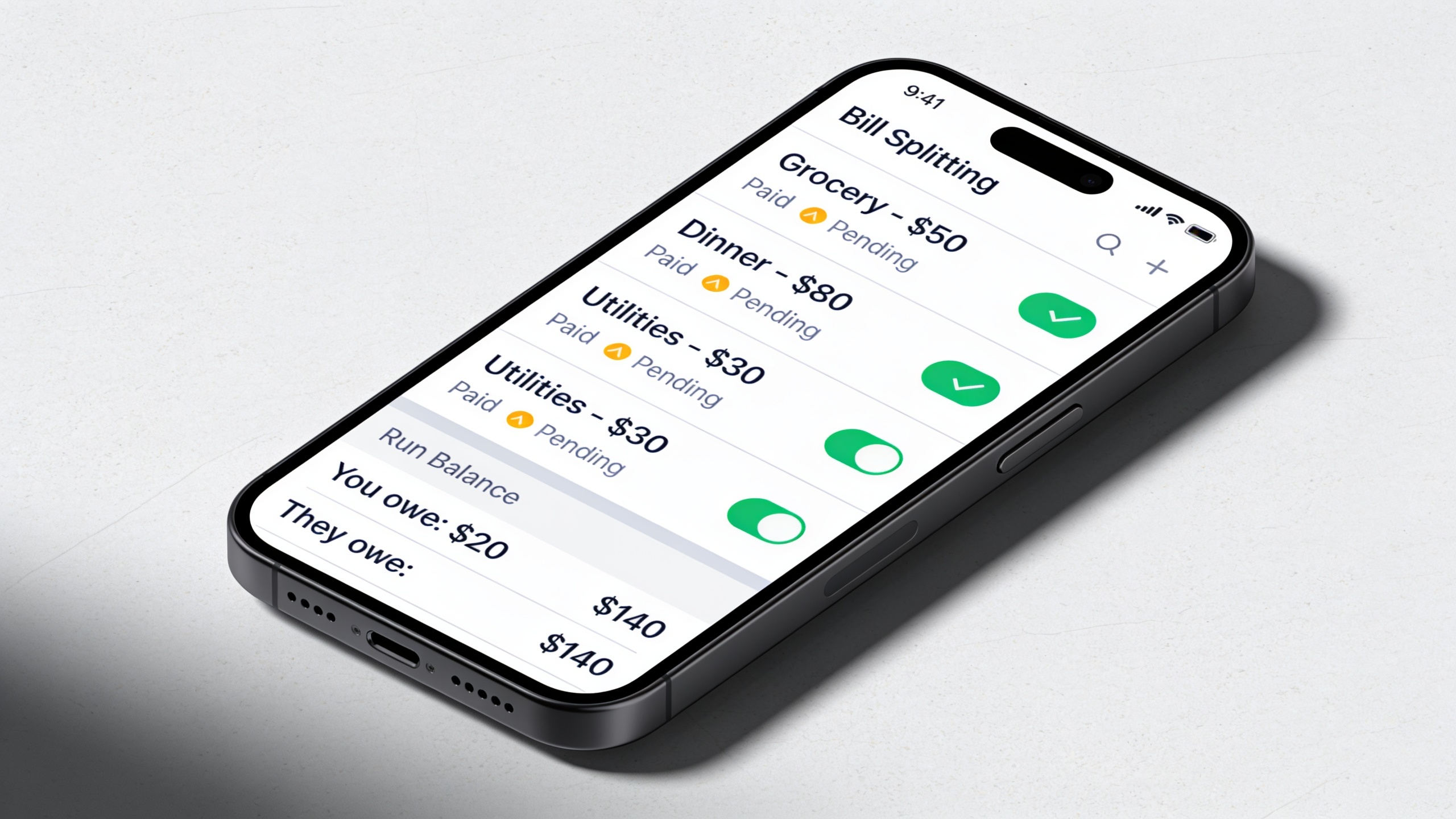
When something does blow up, the smartest move is to go back to the written agreement instead of relitigating what was "fair" from scratch at 11pm. And if the agreement doesn't cover the specific situation, say, a roommate wants a short-term guest to chip in for utilities, that's actually useful info. It means the agreement needs an addendum, not that anybody screwed up.
Worth saying too: roommate money stress usually rides shotgun with bigger financial stress, especially around job hunting, internships, and the whole what-happens-after-graduation spiral. A roommate who's freaking out about landing a job may get way more prickly about a $40 grocery bill than $40 warrants. For students grinding through applications while also managing shared living costs, something like JobScans, an AI-driven platform that scores your résumé against job postings and helps you tailor applications, can take some of the pressure off by making the search feel less like blind guessing. And a calmer roommate is a roommate who's easier to split a bill with. Everything's connected.
College Student Budgeting for Shared Living
Budgeting for shared living means building a monthly budget where rent and utilities are treated as fixed, non-negotiable line items, with variable stuff like groceries and going out layered around them, ideally with a buffer for the chaotic timing of student income. Because financial aid, work-study checks, and parental contributions all show up on totally different schedules than your rent's due date, when the money arrives matters almost as much as how much of it there is.
A decent starting framework a lot of financial counselors point to is some version of the 50/30/20 rule, a budgeting guideline attributed to Senator Elizabeth Warren's writing on personal finance, which puts roughly 50% of income toward needs (rent, utilities, groceries), 30% toward wants, and 20% toward savings or paying down debt. For students those percentages usually need bending, since rent and school costs can eat well over half of what you've got. But the core idea, separate needs from wants and stash something away even if it's tiny, still holds up.
A few habits that genuinely help with shared living: pull your rent share aside the moment income hits instead of waiting for the due date, keep a small cushion (even $50 to $100) for your slice of some surprise shared cost like a plumbing disaster, and review the shared ledger at the same time you review your own budget so the two don't feel like they live in different universes. Rent's almost always the biggest single line in a student's month, so getting that number locked and automatic, through autopay or a standing reminder, removes one giant stressor before it even gets a chance to start.
It also really helps to hold both "my money" and "our household" thinking in your head at the same time without dropping either one. You can be a total ninja about your personal spending and still get blindsided by a shared bill if the household as a whole isn't tracking anything together. That's the actual point of everyone using one system, app or spreadsheet, for the group expenses. It turns "I'm pretty sure I paid my share" into something everyone can just look at and confirm.
Frequently Asked Questions
Is it actually fair to split rent evenly when the bedrooms are different sizes?
It can be, but a lot of roommates think it's fairer to adjust for room size with the square-footage method, especially if one bedroom is noticeably bigger or comes with a private bathroom. Honestly it comes down to what your group prefers. An equal split is simpler; a size-adjusted split is more objectively proportional to what each person is actually getting.
How should we split utility bills like electricity and internet?
Most college roommate households just split utilities evenly across everyone, since usage is nearly impossible to measure without individual metering. This holds even in places that use a size-adjusted method for rent, because utilities aren't tied to bedroom size the way rent is.
What's the best way to track who owes what in a shared apartment?
A shared, always-updated record, spreadsheet or dedicated app, beats relying on memory or a graveyard of payment-app screenshots every time. Apps built for group expense tracking, like PayYaar's Roommates template, are designed to keep a running balance going so nobody has to sit down and reconcile the whole month at the end.
Do we really need a written agreement if we're already friends?
Yeah, you do. A written roommate agreement protects friendships precisely because it kills the ambiguity about who pays what and when, instead of leaning on verbal understandings that everyone somehow remembers differently later. It doesn't have to be formal or legal, just clear and signed off by everyone before move-in.
What happens if one roommate can't pay their share of rent?
Your agreement should already spell this out, whether that's a short grace period, a temporary loan from the group, or a conversation with the landlord if it keeps happening. Since landlords typically hold every tenant jointly liable for the full rent under most leases, it's way better to hash this out ahead of time than to improvise when a payment's already late and everyone's panicking.
Splitting rent and bills fairly isn't really about hunting down some perfect formula. It's about picking a reasonable method, writing it down, and keeping a shared record everyone actually trusts. Whether your household runs a dead-simple even split or works out some detailed square-footage arrangement, the students who dodge roommate money drama are almost always the ones who talked about it early and just kept tracking it, consistently, all semester long.