
5 Signs You Need a Bill-Splitting App Right Now

You know that moment when someone types "ok so who owes what" into the group chat, and then twelve messages later everyone's more confused than before? Yeah. That's the exact problem a
bill splitting app exists to kill.Whether it's rent with your roommates, the family grocery situation, or trying to untangle who paid for what after a weekend away, the manual stuff falls apart eventually. Mental math, sticky notes, that one running list in your head. It never lasts. So here are five signs it's time to quit guessing and let an actual tool handle it.
Table of Contents
- What Is a Bill-Splitting App, and Why Does It Matter?
- Sign #1: You're Constantly Doing Mental Math After Every Group Outing
- Sign #2: Your Roommate Group Chat Has Turned Into a Ledger of IOUs
- Sign #3: You Dread Splitting Costs on Group Trips
- Sign #4: Family Household Expenses Are a Monthly Mystery
- Sign #5: You're Losing Money to Overpaying or Missed Reimbursements
- How Do You Choose the Right Bill-Splitting App?
- How PayYaar Helps You Split Expenses With Friends and Family
- FAQ
What Is a Bill-Splitting App, and Why Does It Matter?
A bill-splitting app is basically a digital tool that records shared expenses, figures out who owes whom, and keeps a running balance so nobody has to rely on memory or a chaotic notes app. So instead of one poor soul fronting the pizza money and then quietly hoping everyone Venmos them back, the app logs the expense, splits it however you agreed (equally, by percentage, or by exact share), and shows everyone's balance in real time.
But the "why it matters" part goes way beyond convenience. Money between friends is weird. Rent, utilities, groceries, that trip, the office lunch order. These are some of the most reliable sources of low-key resentment between roommates and friends and family, and it's mostly because talking about money feels awkward and is really easy to just... put off. A dedicated app takes the emotion out of it. It's not you nagging anyone, it's just a neutral, visible record doing its thing.
And honestly, it matters for your own finances too. If you can't see clearly what you're owed or what you owe across a bunch of people and a bunch of months, you can't actually budget properly. A shared spreadsheet or a pile of bank transfers technically works, but you have to babysit it. Purpose-built tools make that visibility automatic instead of another chore.
Sign #1: You're Constantly Doing Mental Math After Every Group Outing
If you catch yourself doing division in your head at the end of every dinner or coffee run or Uber ride, that's the clearest sign you need a bill-splitting app. And it's not just annoying. It's unreliable, because tip and tax and uneven orders (somebody got the $8 salad, somebody got the $22 steak) mean an "even split" is basically always a little bit wrong.
The real problem is repetition. One dinner? Fine, do the math by hand, whatever. But if you're running these calculations two or three times a week with the same crew, that cognitive load piles up fast. An app just lets whoever paid log it once, right there at the table, and it instantly assigns shares. Equal, percentage, or itemized down to exactly what each person ordered. If you've got a weekly brunch group or a shared gym membership or any recurring thing where the same math keeps repeating, that's where automating it actually saves you real time instead of just being a novelty.
Sign #2: Your Roommate Group Chat Has Turned Into a Ledger of IOUs
When your household chat is 40% "I paid the internet bill, you owe me $22" and "wait did anyone buy cleaning stuff yet," you're using a messaging app as an accounting system. And it's terrible at that job. Group chats aren't built to hold financial history. Messages get buried under memes and dinner plans, and by month three nobody has a clue who actually paid for what back in month one.
This one hits college students and young professionals sharing apartments especially hard, because you've got rent, utilities, streaming subs, and random household supplies all split across people on totally different payment schedules. And here's what always happens without a system: one roommate becomes the unofficial "treasurer," fronting everything and then chasing everyone down for their share. Nobody signs up for that role, and honestly it quietly wrecks friendships over time. Resentment builds over $15 you never got back.
An app fixes it by keeping every shared expense in one spot, tied to real amounts and real dates instead of chat scrollback. And if you're curious how AI is changing the way people track spending in general, it's worth reading what an AI expense tracker is and why it matters in 2025, because it's the same underlying tech. The stuff that logs your personal spending automatically is exactly what makes group tracking way less manual than it used to be.
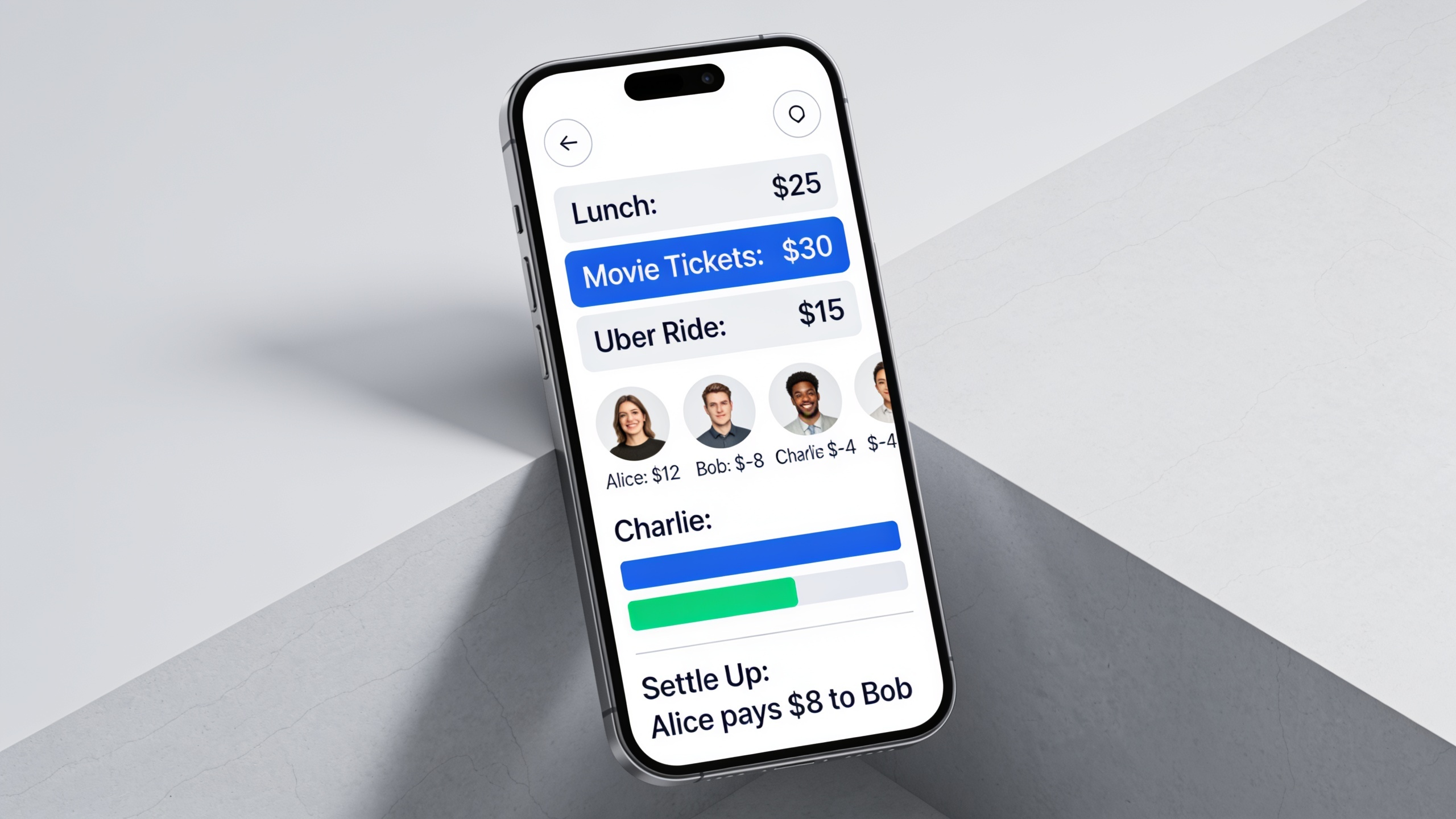
Sign #3: You Dread Splitting Costs on Group Trips
Group trips take everything about expense splitting and crank it up to eleven, because the costs all show up in a burst. Flights, hotel deposits, the rental car, group dinners, activity tickets. Different people pay at different times, sometimes in different currencies. If the thought of settling up after a trip makes you not even want to plan the next one, that dread is the sign. You need a system before you book anything.
Trip expenses are also weirdly prone to fights, partly because the sums are bigger than a dinner bill and partly because people never fully agree on the optional stuff. Not everyone wants the upgraded excursion or the extra night at the hotel. So it helps to lock down the logistics up front through something like the Global Holiday Planner, which lets a group compare flights, hotels, rental cars, and travel insurance in one place. Fewer separate bookings means fewer separate receipts to untangle later.
Then, once you're actually on the trip, a bill-splitting app is the thing logging expenses as they happen. So by the time everyone's back home, the group already knows exactly who owes what. No reconstructing a whole week of spending from memory and a crumpled fistful of receipts.
Sign #4: Family Household Expenses Are a Monthly Mystery
If someone in your house regularly asks "where did the grocery budget even go?" or nobody can agree on how much went to utilities versus takeout last month, that's your sign that the household needs actual structured tracking, not just a shared bank account. A lot of families assume a joint account keeps things organized. But a joint account only shows you transactions. It doesn't show categorized, split, or itemized spending in any way you can sit down and review together.
This is a big one when multiple adults are chipping in unevenly. Say one partner covers rent while the other handles groceries and utilities, and neither of them actually knows if that split balances out over time. A bill-splitting app made for household use lets you set up a recurring group just for home stuff, log costs as they happen, and see everyone's contributions side by side. Way better than trying to reconcile the whole month from memory and paper receipts on the kitchen table.
Sign #5: You're Losing Money to Overpaying or Missed Reimbursements
Here's the one that actually costs you: you're losing money, not just time, because expenses go untracked and reimbursements never get asked for. And this happens constantly. Someone covers a shared Amazon order and just... forgets to request their cut. Or a roommate quietly gives up chasing a small overdue amount because it feels "too small to bother with." Except those tiny amounts stack up into something real over a year.
Take this one seriously, because it messes with your personal budget, not just the group vibe. If you can't account for money people owe you, your whole financial picture is off, which makes saving and planning harder than it needs to be. An app keeps an accurate, persistent balance for every person in every group, so nothing vanishes just because nobody felt like sending an awkward follow-up text.
And this idea, that little unattended losses compound into meaningful ones, is honestly why automation has gotten so valuable across all kinds of finance. Even in totally unrelated fields like content marketing, businesses lean on automation platforms like RobinRank to make sure the repetitive, easy-to-forget tasks actually get done. Because relying on someone remembering to do it manually? That's how things slip.
How Do You Choose the Right Bill-Splitting App?
The right app really comes down to how you'll mostly use it. Occasional splits with friends, ongoing roommate stuff, family budgeting, or some messy combination of all three, because different apps lean into different strengths like automated capture, settlement help, or group templates. There's no single "best" one. The right pick just matches how you actually live.
When you're comparing options, it helps to line up manual tracking against a real app so you can see what you're actually gaining by switching.
| Feature | Manual Tracking (Spreadsheet/Chat) | Dedicated Bill-Splitting App |
|---|---|---|
| Expense entry | Manual typing, easy to forget | Can support AI capture from text, voice, or receipt scans |
| Balance visibility | Requires manual recalculation | Live, real-time balances per person |
| Group history | Scattered across chat threads | Centralized record per group |
| Group types | One-size-fits-all | Templates for trips, home, roommates, couples, office, events |
| Settlement | Separate payment app, no link back to the record | Settlement helpers that connect to your existing payment app |
| Rewards | None | Some apps offer cashback or partner offers |
What the table really shows is that the win here isn't just faster math. It's pulling the entire life of a shared expense into one place. Logging it, tracking the balance, actually settling it. All in one spot instead of bouncing between three or four disconnected tools.
How PayYaar Helps You Split Expenses With Friends and Family
PayYaar is a free, AI-powered app that mashes a personal expense tracker together with group bill splitting, built for exactly the messes I've been describing. It's free to start on Android right now, with iOS support listed as coming soon. And one thing worth being clear on upfront: PayYaar isn't a bank or a wallet. It doesn't hold your money or process UPI payments itself. Think of it as a bookkeeping and rewards discovery tool, where settlements open up in whatever UPI app you already use.
For groups that split expenses with friends all the time, PayYaar has AI Plan templates for different group types. Personal, Trip, Home, Couple, Roommates, Office, and Event, so you're not jamming a family grocery budget and a weekend trip split into the same generic layout. You can capture expenses using AI smart capture too, which handles text, voice, receipt scans, and shared text. That last part matters more than it sounds, because manual data entry is the exact thing that makes people quit tracking apps after a couple weeks.
There's also an item detection feature that lets you photograph shopping items (groceries, produce, clothes, electronics, whatever) and then the app identifies them and estimates local unit market prices near you. You review the quantity and rate before adding them as expenses, since these are estimates, not scanned price tags. Worth knowing so you're not surprised.
Once things are logged, everyone in the group sees shared, live balances instead of reverse-engineering who-owes-whom later, and the UPI settlement helpers make it easier to actually close those balances out through your existing payment app. Oh, and PayYaar layers in partner offers and coupons on top, so you can earn cashback as in-app "pcoin." A small bonus riding along with the core tracking and splitting.
FAQ
Do I really need a bill-splitting app if my group is tiny?
Once expenses become recurring instead of one-off, yeah, even two people benefit. Two roommates splitting rent and utilities every month hit the exact same tracking problem a big group does. The math is simpler, sure, but the risk of forgotten reimbursements and fuzzy running balances is identical. If your shared costs repeat every week or month, an app keeps the record honest so you don't have to.
Can this help with family budgeting, or is it just for friend groups?
It can, definitely. Lots of apps, PayYaar included, have group templates made for household use (like a "Home" group type) that let multiple people log shared costs such as groceries and utilities in one place. Which is a lot more useful than a general joint bank account that never itemizes or splits anything.
Does a bill-splitting app actually move money between people?
Not necessarily, and PayYaar is a good example. It's explicitly not a bank or wallet, so it doesn't hold funds or process UPI payments itself. It tracks who owes what and then gives you settlement helpers that pop open your existing UPI app to finish the payment. The recordkeeping and the actual money movement stay as two separate steps.
How does AI actually help with splitting bills, though?
Mostly by cutting down on typing. Instead of keying in every line item, you can log expenses through text, voice, or a photo of a receipt. Some apps push further with item-level detection. PayYaar's item detection, for instance, lets you photograph shopping items and get estimated local unit prices, which you then review and add as an expense rather than typing amounts by hand.
Spreadsheet vs. bill-splitting app for group trips, what's the real difference?
A spreadsheet needs someone to manually update it after every single purchase and recalculate balances by hand, which absolutely falls behind during a busy trip. Trust me. An app updates balances automatically as expenses get logged and keeps everything organized by trip, so by the time you're all home, the final settlement is basically already done instead of being reconstructed from a shoebox of receipts.
Look, shared expenses are almost never the actual reason roommates and friends and family fight. The real friction comes from unclear tracking and the sheer awkwardness of chasing people for their money. Catch these five signs early, ditch the mental math and the group-chat IOUs for something structured, and you'll find it a whole lot easier to keep both your bank account and your relationships in one piece.